We have a fascination with early botanists, especially those who explored and documented the plants in the New World (particularly Florida). Some are very well known, like the Bartrams, while others are quieter footnotes in history. One interesting father-son pair (like the Bartrams) is John Tradescant the Elder and John Tradescant the Younger, who gave their name to an entire genus of plants – the spiderworts (Tradescantia).
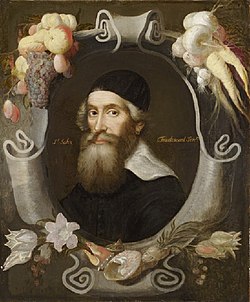 John Tradescant the Elder (1570 – 1638), did most of his work in the early 17th century. Between travels, he designed and maintained gardens for the Earl of Salisbury, the Duke of Buckingham, and St. Augustine’s Abbey in Canterbury. He finished his career as “Keeper of his Majesty's Gardens, Vines, and Silkworms” at Oatlands Palace in Surrey, under King Charles I. His travels throughout his life took him to the Netherlands, Arctic Russia, Algiers, and the Middle East, and in all places he gathered seeds, bulbs, and plants. He also received specimens from the New World from friends like John Smith. He eventually collected all of his specimens and organized them into the Musaeum Tradescantianum, the first museum open to the public in England.
 Though John the Elder described and documented species from the American Colonies, he never actually visited them. His son, John Tradescant the Younger (1608 – 1662), would be the one to make that journey, spending time in Virginia from 1628 – 1637. He brought back some of America’s best trees and plants to share with English gardeners, bringing magnolias, asters, and phlox to English gardens for the first time. After his father’s death, he took over as Head Gardener to King Charles I. Both he and his father also loved to collect “curiosities” in their travels, and their museum included such items as whale ribs, a mummy’s hand, a lion’s head, and crocodile eggs.
To honor the Tradescants, a genus of plants has been named in their honor. Commonly known as Spiderworts, the genus Tradescantia contains about 70 wildflower species all found in the New World. One common species found throughout the BioWorks gardens and Backwoods is Tradescantia ohioensis, or Ohio Spiderwort. This low-growing plant has distinctive three-petaled flowers, usually blue. Spiderworts readily hybridize with each other, and so have become available in additional colors like pink and white. A common plant in woodlands, it is also cultivated for garden use and makes a nice low edging plant.

No comments:
Post a Comment
We welcome your participation! Please note that while lively discussion and strong opinions are encouraged, the MOSI BioWorks Butterfly Garden reserves the right to delete comments that it deems inappropriate for any reason. Comments are moderated and publication times may vary.